So, there's this guy, let's call him Klaas ('cause that's his name). He kinda rocks. I know I shouldn't be so shallow as to say people rock primarily because they buy me gifts, but these gifts warrant the epithet.
See, I went into town with him today. And well, I had to show him my favorite DVD-store, of course (the "Boudisque"). How that turned into a Hedwig-in-the-candystore-with-wide-eyes-and-a-sponsor I honestly don't know. An early birthday present, let's call it. I kind of feel like I have to defend my first pick, "The Dreamers". Yes, it's kind of lacking a plot. Yes, it's muddled thematically. Yes, it is "minor Bertolucci" (I've been listening to Cinecast too much...)
I guess I like it because of my strange sense of nostalgia for 1968. Paris in '68 specifically. I really don't know where it comes from. I have the privilege of hindsight, after all, I can see that the whole revolutionary spirit didn't really lead to all that much good. I can't see the whole "free love" thing as innocent knowing AIDS would come along barely a decade later. Still, the idea of a revolution led by students, sparked by the firing of the director of a movie shrine, of a revolution against conventionality and the illusion of happiness appeals to me a great deal. Maybe that's also why I love "No Direction Home" so much. It tracks the period just before, smells the storm coming. Anything that will give me a taste of what it was like to be there, in that movement in that period, I haste to absorp, hoping to catch a whiff of that mood. The film doesn't show that much of the revolution that never happened, not until the end, but even with the characters firmly ensconced in their apartment for most of the film, it feels like it could not have taken place anywhere else, nor for that matter at a different moment in time.
There are other things to appreciate about "the Dreamers" besides the '68 ambiance, of course. Louis Garrel for example (although, I'll grant I understand that many will drool over Eva Green instead). I really do have a weakness for cute frenchies. This Louis (the son of French director Philippe Garrel, incidentally), he's all sharp lines and brooding eyes and well, I think I'll stop here before my schoolgirlish whimpering gets the best of me. What is it with the French and gorgeous dark brooding types anyway? In Le Temps Qui Reste, the first thing my mom said after the lights went up was a comment on how hot Melvil Poupaud was. And I'll readily admit to having a thing for Romain Duris ("De Battre mon Coeur s'est arrêté", "Arsène Lupin", "L'auberge espagnolle" and its sequel). And did I mention there's a lot of nudity, both male and female, in this film?
Aside from appreciators of physical beauty, this film should delight any film lover who knows his classics. All three main characters in this film are movie nuts, and in their games they replay a number of iconic scenes, not to mention have debates about Keater vs. Chaplin. They even mimic the scene from Bande à Part (a film which, regretably, I have not seen yet) where they run through the Louvre. The joy of filmmaking, the fanboy nature of Bertolucci, even, speaks from this movie. Doesn't that compensate for minor details like not really having a plot?
The second DVD I picked was one I almost bought two months ago already, and the last copy they had left of it. A classic set in post-war Vienna, starring a secret kinda crush of mine...Yep, "The Third Man", and well, its the star is of course not Joseph Cotten, but Orson Welles.
This was one of the first real classics, b&w classics I mean, that I saw. I might even have seen it before Casablanca. I haven't seen it since, and I'm really curious how it will hold up to my memory, but then I loved it. The music. The setting. The fabulous shots, too, the shadows in the sewer. The cynical attitude.
Most of all, I was blown away by the final scene. If I recall correctly (and I might not, but if so you can expect a neat correction soon when I watch it again) Joseph Cotten is standing, leaning on his car maybe, close to the camera at the left side of the frame. We can see the main female character in the distance, walking towards us. And walking, the music playing jauntily, for what I remember as being ten minutes, but which probably lasted only 2 or 3 minutes. And then, when she reaches the first plane, walking to the right and straight out of the frame. The end.
It was a revelation to me. So, you could do this? Just like that? And you could make it last this long? I might be distorting this in my memory, but I truly believe this was one of the films that made me appreciate all that cinema could be and do. I still have these discoveries sometimes, when I saw "Sunset Boulevard" for the first time last spring, and this was one of the first ones.
The third movie (it was a three for 25 deal) is one I haven't seen yet, so you can breathe more easily, this post won't go on much longer. It's "Habla Con Ella". My mom loved it and I usually find Almodovar films interesting at the very least, so it seemed like a good bet. Also, I don't want to watch films I've already seen and liked. Expect it to pop up on the "seen in 2006" list soon.
H.
1.05.2006
A new crop
1.04.2006
This looks like it could be fun
 The Star Wars franchise has definitely lost its appeal to me now, the wonderful storytelling and sense of adventure of the first trilogy (or well, actually mostly of "A New Hope" and "The Empire Strikes Back") spoiled by the melodrama and stale dialogue of the new one, but it looks like this might capture the sense of wonder I never got to experience 'cause I wasn't born yet in 1977.
Truth is, I can barely remember the first time I saw Star Wars. In black and white, I know that, we had the wrong kind of VCR for the tape. Might even have been dubbed in French. What I do still remember is that we watched those tapes over and over again. It wasn't until I saw them again, quite a bit later and with many more films under my belt, that I realised how truly brilliant they were.
You know, that feeling how you sometimes wish you'd never even heard about the Matrix Reloaded and the Matrix Revolutions, because after that the first film was never as great again? It's not quite as intense with the Star Wars prequels because light-saber fights stay cool (what? You didn't know I was a geek by now?), because there's an epic, immortal quality to the primal story being told, and because Ewan McGregor gives a pretty amazing perfomance as a badly acting Alec Guiness. Still. Somehow the name "Star Wars" is not really awe-inspiring any more.
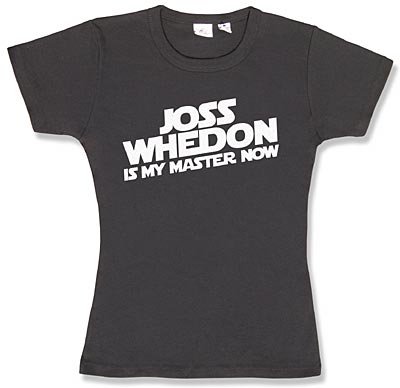
I agree with the T-shirt.
1.03.2006
Movies seen in 2006
To be updated regularly of course. The format is: Title (Director, year of release) Date Seen [code]
Films I saw before will be preceded by a *. The codes are the same ones I used for "My Year in Movies" and can be found below. A permanent link will be in the menu on the right soon. I'll list the new films above the older ones. If the name is a link, it links to a review on this blog. I considered giving grades, but thought the better of it. Grading is hard, always arbitrary, and it really is unable to convey on which level I did or didn't like a movie. Enjoy!
- *Sous le Sable (Francois Ozon, 2000) 29/01 [t]
- The Three Burials of Melquiades Estrada (Tommy Lee Jones, 2005) 28/01
- Les Amants reguliers (Philippe Garrel, 2005) 28/01
- Elizabethtown (Cameron Crowe, 2005) 26/01 [c]
- Munich (Steven Spielberg, 2005) 22/01
- Hoodwinked (Edwards & Edwards, 2005) 19/01 (?) [c]
- Lolita (Stanley Kubrick, 1962) 10/01 - 13/01 [d]
- *The Third Man (Carol Reed, 1949) 07/01 [d]
- King Kong (Peter Jackson, 2005) 02/01
- Rebel Without a Cause (Nicholas Ray, 1955) 01/01 [d]
[c]: downloaded
[d]: DVD
[t]: TV
else: seen in the cinema
0
comments
 Labels:
movies
Labels:
movies
1.01.2006

12.27.2005
It's all about Willie
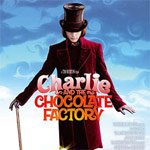 When I first heard that Tim Burton was going to make a new film adaptation of Roald Dahl's "Charlie and the Chocolate Factory", with Johnny Depp as Willie Wonka, I thought this I gotta see. Not only did I love all three previous collaborations between the two (Ed Wood especially), but Tim Burton's quirky imagination, sense of the gothic and affinity for outsides and weirdos seemed perfectly suited to the book, and aside from the fact that I'll see anything with Johnny Depp in it, I was interested in what he'd do with the character.
Somehow though, between reviews that complained his Willie Wonka was too much like Michael Jackson, others that called the movie just plain unsatisfying, and being in France at the time of its release, I managed not to see it. Until yesterday, that is, when I found out that sometimes you should just ignore reviews and go with your gut instinct, because this film is a near-perfect visualisation of the book.
I think what's different between me and say, MaryAnn Johanssen on this count, is that I had read the book about twenty times by the time I saw the 1971 version, and that, to be honest, I didn't really like that movie. Gene Wilder was pretty ok, alright, I'll admit, he was a good Willie Wonka, but the rest? It was just too different from the book, and I didn't see the point of what they added. To MaryAnn, however, the 1971 movie is the benchmark, and I can see why this movie could disappoint if you were expecting a retread of that film: it forgets that film ever existed, and goes back to the book. While watching, my family and I agreed that somehow it felt like we'd seen it before, and this has nothing to do with the 1971 film (I think I'm the only one who has seen it) but everything with how visual the book already was, and how closely the film sticks to it.
I think what makes Roald Dahl and Tim Burton fit so well together here is their sense of exaggeration. They know that sometimes things need to be over-the-top to be truthful. Dahl's bratty kids were so awful they could barely exist, and their punishments grotesque, but the conceit worked because of this. Like the chocolate factory in the title, everything was oversize, the imagination taking just one step further than you would have expected, and Burton understands this like no other. The house the Buckets live in is not just crooked, it's leaning over so far it's a wonder it hasn't falled over, and even the door is so slanted that the characters have to bend to enter. When a chocolate palace collapses, it does so completely and violently, giant columns of chocolate falling down. Burton undertands that it is necessary for everything to be so big, larger-than-life, he understands that the boat they use to travel down the chocolate river is made from candy and it looks it.
In fact, the only parts in which the film kind of fails are the ones that were added. Granted, the idea of Willie Wonka having a dentist father is a good one, and having the father played by Christopher Lee is a stroke of genius, but aside from this the backstory's just a little too neat psychologically. Dahl's Wonka didn't need a reason to be strange and arbitrary, didn't need a reason to have isolated himself from the world. He was just weird that way. Depp's Wonka however - and I blame this solely on the script - cannot say the word "parents", and a neat resolution of his complexes is in store for him at the end. The end doesn't work: Dahl knew the importance of a swift happy ending without much thought of the consequences, in fact, when he did write about the consequences, in his follow-up book "the Glass Elevator", he failed miserably, but Burton wanted more than just saying "and they all lived happily ever after" and leaving it at that, and it's too bad.
One last thing I would like to comment on is the Michael Jackson thing. I think that so many people saw Michael Jackson in Depp's performance has to do with how they viewed the film, with the trial at that point fresh in everybody's mind, because I looked for direct evidence and it just isn't there. Yes, Wonka is effeminate, and yes, he lives in his own fantasy world, but he hates children! Violet hugs him and he's horrified, just as Wonka in the book would have been. He is mean and he does not need a reason for it. He lures children into his Neverland not for his own purposes, but because he has no choice, and he has no trouble dispatching them one by one.
It might be that what confuses people is that they are used to looking for connections with reality. I often do it too, and often with reason: I'm almost sure the references to 9/11 in War of the Worlds was intentional, and it's not hard to find the criticism on forcefully bringing peace in Serenity. Tim Burton is a different creature from most directors, however, because he doesn't care much about reality. His mind is celluloid, and I don't think he intended any real world parallels with this film. With Tim Burton, it's all about the pretty pictures, it's about celebrating weirdo's, not about any contemporary allusions. Even other films do not interest him that much, because they are in reality. He only has one major reference to another film (well, films, but it revolves around one in particular) and it is, appropriately, in the Mike Teavee sequence.
If there is a message to this film, it is the same as the one in the book: it's a celebration of imagination. That's why Dahl opposes TV so much: not because there aren't worthwhile programs being made, but because it "makes the brain lazy". Mike Teavee is a smart kid, more so in the film than in the book, even, he figures out the "system" to find his bar (although I found the reference to the Nikkei index kind of ridiculous), he immediately sees why Wonka's idea to send a chocolate bar through the TV would not work, he is the voice of reality, in a way, seeing right through the "pointlessness" of Wonka's entreprise. Wonka's answer? Like in the book, he simply ignored this "voice of reality", tells Mike he's mumbling and that he can't understand a word he's saying. I believe both Dahl and Burton are trying to tell us this way that we shouldn't always restrict ourselves to reality, and that imagination is vital. I couldn't agree more, and I think the movie is worth seeing if only just for this: it shows just what is possible if you refuse to be restricted by reality.
There's only one other director who might fit Dahl just as well. It's Wes Anderson, of course, and he is currently working on an animated film based on... "The Fantastic Mr. Fox". I'm looking forward to it. Maybe these movies will be enough to make us forget the saccharine horror that was "Matilda".
0
comments
Labels:
movies,
Review,
Starred
12.25.2005
Gay? Big deal. He's Dying.
 Also from the Boomerang, but without the wretched first sentence.
The New York times probably put it most dramatically. “The Winner is…only acting gay” is the attention-claiming title of an article published not too long ago, an article that proclaimed a gay revolution. The Guardian, titling this year the “year of the Gay”, is not far behind. So what are these papers so in uproar about? What’s their big point?
Six, no fewer than six movies with gays in them are coming out this fall, count ‘em! No need to worry, though, both articles haste to comfort us, the actors playing them are very much straight. It’s Oscar time, people, and it seems playing gay is this year’s playing disabled, this year’s impressive weight loss or gain. Will the strategy work?
Include dramatic sigh.
Of the New York Times’ big invasion, only one film can be considered mainstream (the film adaptation of the musical Rent). Not only is the renowned newspaper clearly grasping to find a phenomenon to report on, but the angle they put on it is outrageous. Their main point? Playing gay is only accepted, nay, only possible, if the actor’s sexuality is decidedly “normal”.
Take Heath Ledger in what I confess to have called, like so many others, “the gay cowboy movie”, Brokeback Mountain. If we believe the New York times, the only way we can appreciate this love story between two men is because we know that Heath is a manly man in real life, who’s even knocked up his on- and offscreen wife/girlfriend, Michelle Williams. The Guardian goes so far as to suggest she’s been cast merely as a “sexual alibi”. And of course the fact that Peter Sarsgaard, who portrayed gay characters in several films, “appears in gossip columns linked with Maggie Gyllenhaal” is crucial. How ridiculous their point is, is best seen when using their own words: “Our awareness of these nonfiction roles makes it easier and maybe more acceptable for middle-class heterosexual viewers - a group that does, after all, include most of us in the audience - to embrace characters whose sexual preferences we don't share.”
Bollocks.
It just makes you want to flee to France, where they – at least on film, and in film criticism- have a more relaxed way of dealing with the subject. Take François Ozon, for example, one of France’s most prolific and interesting directors at the moment. The main character in his new film, , “Le Temps qui Reste” (the time that remains) is gay, and dying. In any American film, his illness would have been Aids. In this film, he gets cancer. Admittedly, this is necessary for a later plot point, but still: it shows that to this director and writer, the sexual orientation of this character is not the only thing that’s important. Despite some rather graphic scenes (yes, this is what my mother and I do for quality time) the film might not have been all that different had the main character been straight.
For all the above, but also for the beautiful music by Arvo Pärt, for the astounding cinematography, for the chance to see Jeanne Moreau shine on screen again, for some scenes that really worked, I would love to proclaim this film a masterpiece. Unfortunately, it isn’t.
It’s a pity really. Some parts here work beautifully, other almost do, but as a whole the film is ultimately unsatisfying. It charts what happens to beautiful, arrogant and yes, gay, photographer Romain after he finds out he only has a month or two to live. He pushes everyone away, his family, his boyfriend, and tells only his grandmother (Moreau) what’s going on. He goes to a darkroom. He sees himself as a kid. He has a conversation with a waitress in a diner who thinks he’s beautiful. In the end, Ozon returns to his fascination with beaches and lets his story end.
As the summary above, the film feels to episodic, too aimless. There are some nice moments with the boyfriend, and the short segment with his grandmother is wonderfully worked out, but in the end we have no insight whatsoever into his relationship with his family, with his sister especially. We don’t know why he reacts the way he does, why he shuts everyone out. We spend a whole movie with this man, but while it would take me a long time to grow weary of watching the beautiful Melvil Poupaud, we ultimately get no insight into who he is. As an exploration of death and how people deal with it, Ozon’s own “Sous le Sable” is a much better film, and it’s a pity, because this one shows the potential to be just as great.
Do actors win Academy Awards just for morphing, for once not their appearance, but their sexuality? Is Philip Seymour Hoffman a contender for best Actor this year because despite their differences in statures and physique he managed to embody who and how Truman Capote was, or because Truman happened to be gay? Until the media starts growing up and out of its jitterish and exalted treatment of homosexuality, it will be hard for movies that feature homosexual protagonists to be judged on their own merits.
0
comments
Labels:
movies,
Review,
Starred
Art and Reality
 My "editorial" for this month's Boomerang...So yes, real published work! Enjoy. More to come.
‘tis the season to be jolly…and the season of gold. The Academy Awards are coming up and in the US most films aiming for one or more little statuettes are being rolled out in December: early enough to still qualify and late enough that they will be fresh in the voter’s memory. Remarkable again this year is how many of the contenders have a basis in reality. Last year this trend was already visible – four out of the five nominees for best actor were portraying real people – and this year continues it: hopefuls include Good Night, and Good Luck, George Clooney’s second film as a director about the reporter Edward Murrow and his fight against McCarthyism, Capote, a film documenting the writing of “In Cold Blood”, Truman Capote’s famous non-fiction novel, and Walk the Line, a biopic about Johnny Cash. Steven Spieberg’s Munich, about the killing of Israeli athletes by Palestinian terrorists in Munich in 1972 and the retribution that followed it, has yet to come out but is already rumored to be one of the front runners. The only film not based on reality that stands a chance to win Best Picture is Brokeback Mountain and this was enough for some ridiculous responses in the media, as you can read in the article on Le Temps qui reste.
It makes you wonder: do we need art to put reality in perspective? Can art only be considered to be “high art” if it takes reality as its basis and transforms it? And if the answer to these questions is yes, why is the non-documentary film rated highest on rottentomatoes.com King Kong, not exactly the most realistic film?
The question arises whether the films based on “true stories”, and for that matter all art that has a basis in reality, merely reflects it or transforms it in a subtle way, reinvents it so to speak. For example, the photographs by Rinke Dijkstra, an exhibition of which Floor reviews, come as close to objectivity as photography allows yet we look at them with more interest than at random snapshots because she chose these people, these children to photograph. Simply this makes them more important, more mysterious and more intriguing than they would otherwise have been. Rineke Dijkstra’s work was also on display at this year’s Museumnight in Amsterdam together with other works that can be seen in the context of their manipulation of and influence on reality and how we perceive it. Aansan reports especially on those by VJ Erwin Olaf, whose works according to her “[play] with reality on the edge of fantasy and dream”.
Then there’s Bob Dylan, about whom it’s always been almost impossible to distinguish fact from fiction. Scorsese made a documentary about him –also reviewed in this section- but didn’t even try to disentangle truths from falsehoods, the invented from the real, just observed. Still, why is it worth mentioning that Scorsese directed it if not because this influences the end product greatly? By leaving some things out and putting others in, by lingering on Dylan’s face sometimes a little longer than we’d expect, by superimposing specific comments over certain images, he molds reality to become art and as such he influences how we see it.
Umberto Eco recently wrote in the Telegraph that while ours should be a cynical age because we’ve mostly let go of God, we live instead in a world of endless credulity. It is understandable in a way that people nowadays blend fact and fiction, with reality shows that might or might not be scripted and truth often seeming stranger than fiction. The Da Vinci Code is not only a best-selling book but many follow it as some kind of evangelism while other books like the Da Vinci Code decoded attack is as if it were a history book, and not conspiracy theory escapism. Eco argues that it is the lack of religion that makes us turn to other “spiritual” avenues, books like “the Celestine Prophecy” for example, passionately defended by Orr Shomroni here.
Sometimes it would seem that we need art to understand reality, almost. That we need some kind of fiction as a comfort in our lives. How else to explain the popularity of astrology and similar things? Art might be as good a way as any a lens to see the world through. If God is dead, let’s hope it makes art live a long and healthy life.
12.20.2005
Personal Heroes
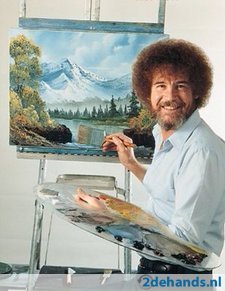 "I'm gonna good a great big tree hear, I like big trees, but you can out it there if you want, or there, it's your painting. Hm, let's see, I think the light is coming from here, so we're just going to add a few shadows here, and here, just carefully put a few shadows on, not too much."
Do I even need to explain this one? Nothing on TV is more soothing than Bob Ross (who, unfortunately, died in 1995), not even curling tournaments.
I was amazed, a few days ago, to find the book "Kiss Kiss Bang Bang", a collection of essays and reviews by Pauline Kael, just standing there in a small bookcase known grandly as the "college library". I'd been looking for it forever! And here it was, and the prize was even still on the inside cover: 20 eurocents.
They really are amazing essays. She destroys Blow-Up, in a way that doesn't make me want to agree with her right away, but that makes me want to watch the movie again and see if she has a point. She was the critic who "discovered" Bonnie and Clyde, at least, the one who first saw why it was great, and her essay on it is so full of details, so nuanced, and thoroughly fascinating to read. Finally, Ricky Gervais. Some might know him from series such as "the Office" (the original, British version) and "Extras", but I have to admit I never caught more than a couple of episodes of both. Now, however, he has a podcast, and as you all know I love those. So, in that train this last Sunday, I listened to the first two episodes...And people must have thought I was crazy, laughing out loud, doubling over, from what was coming from my headphones. Totally weird, without structure or goal (though there is a lot about monkeys), but somehow incredibly funny.
H.
12.16.2005
Sampling Metafilter
Keep in mind, this is from only 5 days of posting.
In the spirit of Christmas
Or if, instead, you want to give your loved one something from the health and family planning section
In the "oh, yeah, that had to be invented, too..." category (more info here)
Disney made a bad decision (really, terrible) and people revolt
If you haven't had your daily dose of cute (seriously, you can find anything on the net...)
Research confirms what we already knew: Wikipedia rules
I hope my mind (and sense of humor) will still be this sharp at 83
'Cause I love Paris
Dutch Bathroom Tiles enter the internet age
Time Cover Art: how flash should be used.
Finally, some links from other sources:
Kong and Sexual Politics
I want this.
There are too many top-ten lists too mention, but this has to be one of the best designed ones
'Cause most other reviews made the point that Memoirs of a Geisha was boring boringly
Pitchfork reviews 29. 4 more days until it comes out.
To end up, the most beautiful commercial on TV these days is of course, a triumph in these days of CGI because it didn't use it. Those are real balls, hard as it may be to believe.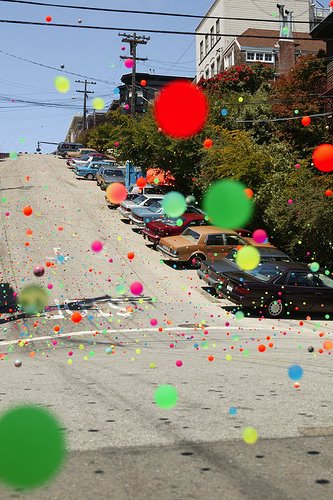 I looked up the music that accompanies it. The song is Heartbeats "arranged" (whatever that means) by José González. It's a little flat without the accompanying images, but still quite beautiful.
H.
12.15.2005
My Year in Movies
 Yes it is that time: the time of year-end lists. And who am I to decline participation in this joyous -though also oft-annoying - tradition?
So, below, find the films I've seen this year. Well, not all of them. First, only films I saw for the first time in 2005 count. Also, only those that came out in 2005...and in 2004. Let me explain: 2005 because that's traditional, and 2004 because, well, 16 films is not a whole lot. Thing is, I skip a lot of bad movies, and the good ones tend to come out near the end of the year - academy awards and all - meaning I usually don't see them until the year after.
Well, you ask, as soon as you're at it, why not do it about all films you've seen this year? Two good reasons for that: first, I don't remember all the films I've seen this year, there were so many, and I can't even guarantee this list is comprehensive. Most importantly, I took a film course this year, and while some beautiful films I've seen in that don't qualify as I'd seen them before (Citizen Kane, Casablance, the Godfather) I think this year's films would have had a hard time competing with the likes of Sunset Boulevard and Vertigo.
Enough talk. On with the list. An explanation for the thingies between brackets is below.
Top 4 (because I'm random that way. Also, in no particular order)
- Serenity
- A History of Violence [s] (the more I think about it, the more I like it. Read more.)
- No Direction Home [t]
- Sideways [2]
Admired, but did not love:
- Hotel Rwanda [2]
- Closer [2]
Flawed, but still worth seeing:
- Le Temps Qui Reste (for cinematography, music, a gorgeous main character and mostly: Jeanne Moreau. The review I wrote for the Boomerang will be up soon)
- The Life Aquatic with Steve Zissou[d] (for a near perfect first hour)
- Lords of Dogtown [s] (for the exhilerated feeling, and Heath Ledger doing Val Kilmer. By which I mean doing his best impersonation of, of course.)
- Un Long Dimanche de Fiancailles (for reminding us that WWII wasn't the only horrific war)
- Sin City (for style if nothing else. Watch out for your balls)
Succesful Action Spectacles:
- Batman Begins
- The Incredibles [2]
- Hellboy [d]
Unsuccesful Action Spectacles
- Kingdom of Heaven
- Sahara [s](alright, alright, that one was kinda fun. In the way that only bad films can be fun. And well, I maintain that it had much to do with the way William H. Macy delivered the line "They did a Panama". Also, Lambert Wilson can do no wrong in my book.)
- Constantine[s](but Tilda was cool in it, I have to admit)
Action Spectacle with the lamest dialogue: Star Wars (you know which one)
Action Spectable with the worst acting: Star Wars (explain again, how can you have Ewan McGregor do a pitch perfect impersonation of Alec Guiness....acting badly?)
Action Spectable with the most cop-out ending: War of the Worlds (Spielberg sometimes really is too much of a sap)
Sleekerst Action Spectacle: Collateral [d]
Most Fun Brainless Action Spectacle: Mr. and Mrs. Smith
Most Fun Brainless Caper: Ocean's Twelve
Biopics (meaning taken loosely. From those I liked to those I liked less):
- The Motorcycle Diaries [2] (made me want to pack up my bags and leave for South-America immediately. Definitely too positive about its subject, though)
- Kinsey [2] (A lot of fun, maybe a little too positive)
- The Aviator : (not that much fun, still maybe a little too positive)
Documentaries (same)
- No Direction Home [t] (Home run by Scorsese. Among the best films of the year. Read more here)
- Inside Deep Throat [s] (maybe not all that insightful, but boy did I laugh...Also, I now get why people went to see the movie. It's Linda Lovelace's "how the ... does she do that?!" factor)
- Control Room [a] (Intriguing. Isn't that the best you can say abut a doc?)
- Outfoxed [a] (way too polemic)
Mind-Fuck Movies (ditto)
- Primer (shows time-travel movies are possible without Ah-nulds butt and/or eighties music. Or whirly effects, for that matter)
- I {heart} Huckabees [d] (many interesting ideas, not always well exucuted, but some really cool moments)
Hilarious even if it shouldn't be: The Spongebob Squarepants Movie
Not as hilarious as it should be: The Hitchhiker's Guide to the Galaxy (although the song at the beginning deserves an award of its own. And "Bless you" was brilliant)
Movies randomly not assigned to a specific category for being neither bad nor really good:
- Broken Flowers [s] (works really only when the amazing Jeffrey Wright is onscreen)
- Garden state [d] (I probably should have liked this more than I did, but only the music and Peter Sarsgaard's performance really stood out)
- Team America [c] (funny enough. Not a standout)
- Mean Girls [d] (ditto. The bus moment was the only thing that stayed with me)
- Napoleon Dynamite [c] (same, again)
- Criminal [d] (It has Westwood! And Diego Luna! And I can't remember much else...)
- Anchorman [d] (Ok, ok, I did laugh. Especially when the different teams showed up. Still...)
Classics I saw for the first time this year and wanted to mention:
- La Dolce Vita [d] (Wow. I'll have to watch that about 5 times more, I think)
- 8 1/2 [d] (ehm, yeah. Ditto. Also, I want to look like Anouk Aimée)
- The Good, the Bad, and the Ugly (loved it. How could I not?)
- Sunset Boulevard (ditto, of course)
- Vertigo (not as convinced about this one, but definitely a film I'm glad I finally saw)
- Singin' in the Rain (it's official, I'm not the musical type)
- The Terminator (how could I not mention the naked gubernator?)
- Many, many more. Film classes rock.
2005 films I'd like to see in 2006, and maybe even sooner
- Brokeback Mountain
- King Kong
- Kiss Kiss, Bang Bang
- The Squid and the Whale
- Match Point
- The Three Burials of Melquiades Estrada
- Last Days
- Capote
- Good Night, and Good Luck
- Pride & Prejudice
- Walk the Line
- The Constant Gardener
- Grizzly man
- The Upside of Anger
- Nine Lives
- Caché
Needless to say, that's not going to happen, but a girl can dream. The plan, in any case, is to make a page on this blog, somewhere back-dated, where I'll keep a list of the movies I'll see from january 1st onwards.
Outraged at some of my picks? Something I blatantly left out? Can't believe I didn't see insert-film-here yet? Leave your comments!
H.
[a]: seen in class
[c]: downloaded (isn't it admirable how few those are?)
[d]: seen on DVD
[s]: sneak preview
[2]: 2 dollar movie at UCLA
Nothing: seen in theatres.
0
comments
Labels:
movies
12.13.2005
"It was beauty killed the beast"
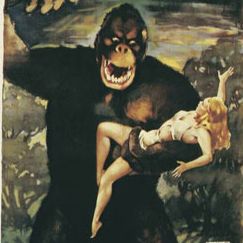 King Kong, Cooper & Shoedsack, 1933
I can understand why this film made Peter Jackson want to be a director.
I'd managed not to see it, somehow. I did see both the 1931 Dracula and the 1931 Frankenstein, but not this one. Of course, with Jackson's monumental (and surprisingly well-received) remake coming out tomorrow, I had to revisit the original. I never thought it would be so genuinely good.
Oh, maybe good isn't the first word that comes to mind if you just start anywhere in the middle. To modern eyes, Kong himself, and most of the other effects, seem clumsy, laughable even. Watching from the beginning, however, letting the atmosphere creepm up on you, discovering the crew together with a screaming Fay Wray, he is suprisingly believable. Oh, of course you see he is made of clay, of course his movements show that he was made with stop-motion, and yes, foreground and background don't match all that often, but still, what a spectacle. After all, isn't the most important quality that special effects should have that they draw you into the movie? Who cares about realism, as long as the effects make you care. And I cared. I held my breath during the wrestling match between Kong and the dinosaur, and I felt a pang when he fell.
What I was most surprised by is not how much the film gripped me, but how violent it was. Many, many people get killed here, brutally, and somehow it shocked me more than, say, Sin City did (well, the Sin City deaths, at least, the whole ripped-off-balls things not taken into account). From the trailers and what I've heard, King Kong in the new version is a sweeter, more tender creature, and Ann Darrow loves him back in a way. Not in this version, but it's true that you almost blame here for it, because even this clay model has an amazing array of feelings on his face. I'm looking forward to see what Andy Serkis can do with that.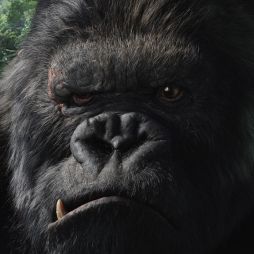
Many articles come out now asking what it is with our fascination for beautiful blondes in the paws of big black beasts. I don't know the answer, but whatever it is, it seems to work for Peter Jackson.
H.
0
comments
Labels:
movies,
Review
12.09.2005
Trailer tales
Disclaimer: I will get back to a more regular posting schedule, I promise. Just a bit busy right now.
I am a big fan of Apple's trailer website, especially now with the incredibly gorgeous high-definition trailer coming out. I check it probably three times a week. And as deceptive as trailers can be, I do obviously form an opinion about them, and they do affect how much I want to see a movie. Or how much I'll make sure to avoid a movie...Take the trailer for the upcoming Tristan and Isolde, probably greenlighted back when King Arthur still looked like a good idea. James Franco, I'm all for (I truly believe in his acting talent, though he hasn't exactly chosen films that display it lately), and the story I devoured as a kid, fascinated by the inevitable tragedy (and well, I thought the living clandestinely together in the woods thing was, ahem, interesting). But as soon as I heard the Evanescence music underscoring the trailer, I said to myself, nope, sorry, I'll pass. It's not that I don't like Evanescence, though I'm not a big fan, it's mostly that it reflects the way the filmmakers are going with this, and I won't be going along.
Other trailers have the faculty of making you interested in a film you might not have thought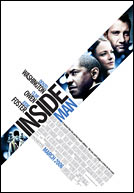 about much before. Case in point: Inside man, with Clive Owen and Denzel Washington. I'll watch anything with Clive in it, of course (although, come to think about it, nothing will convince me to see Guinevere in a leather bikini, maybe it's just the Arthurian thing I'd rather keep in books), but a hostage negotiating thing mixed with a bank robbery sounds like a rental. The trailer makes it look good though. Oh, and look next to Denzel? Yep, it's the Operative, aka. Chiwetel Ejiofor. I'm glad to see this guy getting more and more success, he truly is a great actor, his performance in Dirty Pretty Things was amazing. Back to the topic, Inside Man, from this trailer, looks tight and twisty, suspenseful, and worth a look.
 Then there are of course the trailer for films you already want to see and that frustrate you because you want to see the film now, right away, and not " somewhere in 2006". I must have watched the trailer for The Fountain twenty times already. trying to get as many details as possible from those few images, and everytime it gets me excited all over again, and frustrated that there isn't even a US release date yet. Hugh Jackman, Darren Aronovski, and well, it just looks pretty damn cool, too.
Finally, there are the trailers that tell you absolutely nothing about the quality of the final product. Yes, the "announcement trailer" for X3 is cool, shown all the characters, offers glimpses of the story, Jean Grey is back (as Phoenix?) and kicking ass, but with Brett Ratner directing, it isn't enough to convince me it won't suck. Also, I'm not quite sure I agree with the backing music and the whole action angle: what made X1 and especially X2 great was that next to terrific action pieces, Bryan Singer infused these stories, these characters with a heart. I'm not quite sure Brett Ratner can do the same, seeing as I've seen no evidence of him actually having a heart yet.
How these movies will end up? How indicative the trailers were? I'll tell you if and when I see them.
H.
12.03.2005
29
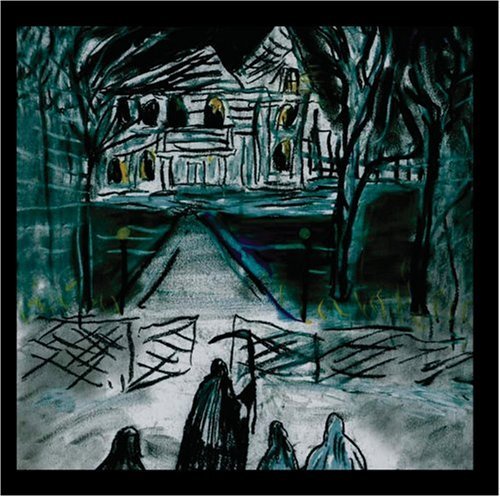 Remember, my Jacksonville City Nights review? When I despaired, wondering if Ryan Adams would return to being the artist I loved him for being from time to time? How I hoped the third album he would put out this year would be truly glorious finally again?
It is.
29, Ryan's latest, doesn't officially come out until December 20th, but it's been leaked. It's streaming online, and downloadable if you're persistent (and really, nobody can convince me that's a crime, because I'll buy the CD the day it comes out), and I've listened to it about, oh, 3o times so far? It's just that beautiful.
The album's only nine songs, but they are wonderful little epics, beautiful and spare, relatively long (up to nine minutes), no Cardinals to be heard, just Ryan with his guitar, on the piano. According to Ryan himself, this is the album to conclude his twenties, and every song is one year in that decade. That seems to mean that at 2o, I'm not in my twenties yet, but I suppose that only makes it more interesting for me, this peak into the future.
In any case, while the first song ("29") has yet to grow on me, the second one is the wonderful "Strawberry wine", where Ryan flirts with singing off key but keeps it just sad, melancholic, gorgeous, and "Night Birds", which follows it, is similarly haunting, and would have fit perfectly on Love is Hell. Then, oh, just when you thought it couldn't get any better comes "Blue Skies Blues", the piano softly playing, and it takes your breath away, to use a cliched phrase. It is just that beautiful. It's over five minutes long, but it still ends too soon.
The delights don't end there. While "Carolina Rain" is not particularly remarkable, especially after just hearing "Blue Skies Blues", and seems to reflect a country phase in Ryan's life. "Starlite Dinner" is wonderful but a bit in the same vein as the other songs, though it's romantic atmosphere is hard to resist. Unfortunately, this also means this song features some of the weaker songwriting, inlcuding the lines "Is it possible to love someone too much? You bet", but weak songwriting in Ryan Adams terms is still pretty amazing.
Then comes "the Sadness", and it really makes me want to meet the 27-year-old Ryan Adams. it's a song that would fit perfectly in the soundtrack of a western, it is a western in fact, restless and breathless, talking of horses and trains and boxcars, storytelling at its best, and a song unlike any others I know by Ryan. I'm not sure if I like it yet as music, but it certainly intrigues me, invites you to listen to it again and again.
There are two more songs, and these are definitely more introspective, managing to convey such a richness of feeling with so few means: on "Elizabeth, you were born to play that part" is the melancholy tale of a girlfriend long gone but not forgotten, descending into a strange haunting instrumental part, while "Voices" is, according to Ryan himself, told from the grave, and accordingly chilling, a wonderful ending to a true return to form.
Thank you Ryan.
3
comments
Labels:
music,
Review
11.26.2005
Oh, that I could by any chemic art
To sperm convert my spirit and my heart,
That at one thrust I might my soul translate
And in the womb myself regenerate!
There steeped in lust nine months I would remain,
Then boldly fuck my passage back again.
__________________________John Wilmot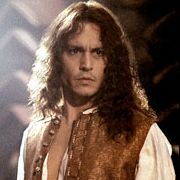
It seems the movie The Libertine is quite bad, but the man its about is, in my humble opinion, brilliant to have written the above. And well, obviously dear Johnny can do no wrong.
11.16.2005
And now, about my most-anticipated movie of next year...
 The New York Observer has a very insightful piece not just about this film, but also about why it is becoming more normal for women to find the idea of two men together appealing. Read before it's gone!
And if this inspires you to read the original story (obviously, a spoiler for the film).
0
comments
Labels:
movies
11.15.2005

11.07.2005
A History of Violence
 I love when I can re-use a picture...
A warning: the following is not a review of A History of Violence, David Cronenberg's latest, but a rumination on certain aspects of it. There will be spoilers galore, so if you still want to see this movie, stop right here. I mean it. I read too much beforehand, and I think the film would have hit me in a more visceral way if I hadn't.
First, I liked it. A lot. I wasn't entirely sure as I walked out a theatre, I had to think about it a bit, but now that I have...It is a bit too constructed in places, too crafted. On the other hand, wow.
One aspect I want to linger on is the two sex scenes. A friend told me he'd felt really uncomfortable watching them. Granted, he was in that theatre with his -according to the guy himself- uptight father, while I saw it with my significantly not-uptight (untight? downtight?) dad. Still, the guy complained that the scenes were, to him, "unappealing", "unpleasant" and the characters (played by Viggo Mortensen- who, I believe, must be the ultimate man, painfully perfect almost. Did you know he writes wonderfully, too?- and Maria Bello) "came of as unsophisticated retards".
Truth be told, I'd heard so much about these sex scenes beforehand that I was a bit let down. They weren't that explicit at all in terms of nudity (there is one shot of Maria Bello kind of nekkid that doesn't even technically occur in one of the sex scenes, and while we do get to see Viggo's buttocks, that's pretty much it) and while there was one sex scene, a pretty violent one at that, shown from beginning to end, it was to me fascinating rather than unsettling.
What also is uncommon about the film is that the first sex scene features oral sex, 69 to be presice, and many reviewers were boggled by this. I don't quite understand why. I mean, I both don't understand why it is so rare and why it was considered to be shocking in this one, especially because for once, this is not a gratuitous sex scene. It might not contribute to the plot, but it does work very well on both a personal and a symbolic level: it both illustrates the relationship between these two people and it creates a wondeful contract with the latter sex scene that really exemplifies the film's shift in tone, and the main character's shift in identity.
Let me expand a bit more on this latter thing. In the first scene Viggo is Tom Stall. He's not playing Tom Stall, he is Tom Stall. For example, as his wife gets changed in the bathroom, he is nervous, doesn't quite know what to do with himself. He straightens the covers, folds them open, grins at himself. He opens his shirt unsurely, starts undoing his belt, but it's clearly mostly because he doesn't know what else to do with his hands. When Edie comes out in the cheerleader outfid, he is honestly amazed. Another important characteristic of this scene is that it revolves around oral sex. This is not just for shock value at all, nor for titillation. It is because oral sex, no matter how much the giver might like or dislike doing it, is functionally a giving, unselfish act. Tom starts it to thank his wife, and she reciprocates. It shows that they love each other and are willing to sacrifice things for each other, and its innocence is further accentuated by their acting like teenagers. Mostly, it is in sharp contrast with the second scene.
In this second scene, the sex is all about taking. It starts out as a fight, kicking and grabbing throats, but all along there is sexual tension and this comes out soon enough. The sex is rough, with barely any words, and instead of the glowy aftermath of the first scene, it ends as abruptly as it started. Viggo is Joey in this scene, not the loving husband but the brutal, carnal killer. It's a scene that certainly unsettles, but for me, this was mostly because I found myself to be slightly turned on by it. I think this was probably Cronenberg's intention, just as it seems his intention with this entire film to confront us with how violence and sex appeal to us, turn us on.
What I admire about these sex scenes is the level of reality. I don't mean I think theses kinds of scenes happen everyday, but there's no soft focus, no underscoring music. Instead, there's clumsiness: in the first scene, Edie throws her husband's belt behind her and get startled by the sound it makes hitting the wall. In the second scene, we see her back later, covered with bruises: this sex is not without consequences, physical or mental.
Cronenberg seems like such an intelligent, fascinating man. I'd love to meet him and pick his mind, even if the thought of what I could find is a little unsettling. Or who am I kidding. It's because I think I might find something unsettling that I'm so interested, of course.
H.
0
comments
Labels:
movies,
Review,
Starred
11.04.2005
Anderson Cooper

11.02.2005
1 month of neglect
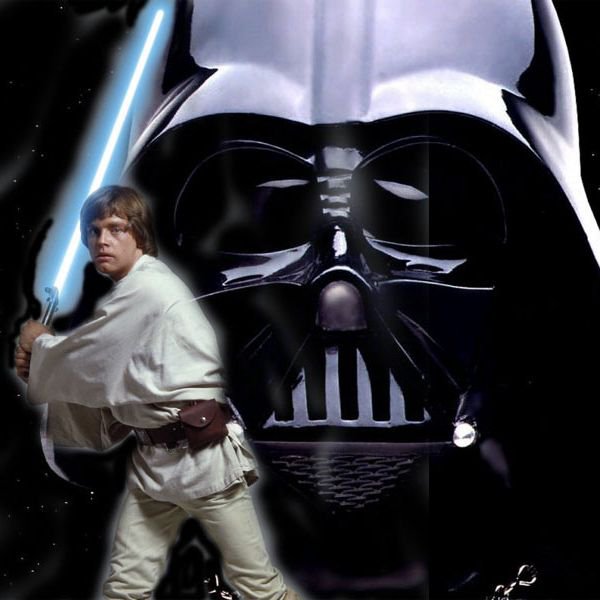 This blog, I'm afraid, will be be neglected during November. I'll be writing and hopefully managing to fit in my school work as well. I'll try to post a few nice links every couple of days, and I promise I'll return to full activity in December!
Until then, I'll leave you with this little gem of overanalysis...
10.30.2005
Dream Job #251

I'd like to host a radio show. A late night radio show, preferably, airing around 11 or midnight.
So you ask, why not just make a podcast? Everyone's doing it. It's not that hard. But podcasting, to me, has two main obstacles. No, three. First of all, the best podcasts, in my opinion, are those hosted by two people, not just one. One person talking to themselves bores after a while, but two people discussing is interesting to listen to (take Adam and Sam from Cinecast for example). Second, music is an issue. Either you're being illegal or you play very obscure music by bands who'd love any kind of attention. Brian Ibbott manages it on Coverville, but it's tricky, and too much work if you just want the occasional song rather than having a whole podcast revolving around music. Third, I'd love to do interview. Like the one with Ranses Shaffy I'm listening to at the moment. But it's hard to find interesting people willing to be interviewed, especially for a PodCast.
So, what would my show look like, ideally? Well, it would start with 5 to 10 minutes of remarkable news and developments, links maybe to interesting things, but also a list of the concerts for which ticketsales are opening (I always miss this stuff. Like the Sufjan Stevens concert. And the Belle and Sebastian concert last year. And the Ryan Adams concert the year before that). Then the rest of the time an interview with, and I see this concept very broadly, "someone interesting". Not necessarily famous. Not necessarily people involved in the arts, although probably many of them would be. Most importantly, not someone who's been in the news lately.
All the interview shows, everyone has something to sell. A new book, production, CD, etc. And that thing dominates the conversation, when instead I'd often just like to get to know the interviewee. So, the idea would be, someone with no particular aim for the interview, just chilling on the couch, talking about no matter what. Oh, of course I'd do research in advance, prepare questions to jumpstart the conversation, but if the consersation turns to cow tipping, then why not? Hopefully this would lead to less predictable interviews. More like the interviews in Interview, in a way, but longer and therefore hopefully a little more insightful.
The show would of course be interspersed with interesting music, about 4 or 5 songs total I think, one old, one new, all relevant to the interviewee. By the interviewee if he/she is a musician? Maybe one song or two, but definitely not all. Enough to give a taste of what the person does, but I'm more interested in what music they'd listen to, or in how they'd react to music they didn't know yet.
So yeah, one of the many (251 is a broad guess, but probably not too far off the mark) dream jobs I'll never have but like to dream about.
H.