 This morning, I heard a critic on the radio summarily dismiss Death Proof (Tarantino's part of Grindhouse, released separately here) without offering any further qualification. Death Proof (from here on: DP), he said, was a movie honoring bad B movies by being, itself, a bad - and worse: uninteresting- B movie.
I object.
True, DP is, to borrow a phrase from The Squid and the Whale, minor Tarantino. The only QT movie it's arguably superior to is Kill Bill pt. 1. But it's much more interesting than "just" a bad B movie.
QT's films typically take place on one of two levels. His first three (Reservoir Dogs, Pulp Fiction, and the underrated Jackie Brown) take place on the first level, which I'll call level A. On level A, every character shares QT's intimate knowledge of and deep interest in pop culture, but this also implies that this level shares its pop culture with the real world. While it is undoubtedly a movie world, the rules of our world apply: gravity sucks, lethal wounds will kill you, and nobody has superpowers. In fact, the one time these "rules" seem to be violated, in Pulp Fiction, it is seen as a miracle. Level A is a tweaked version of our own world: the details might be different (Big Kahuna burgers and so on), the cars are cooler, and there are surreal elements, but the basis is the same. QT points to this, for example with the mostly diegetic music in Reservoir Dogs.
Then there's level B, where the movies take place that the characters on level A would love to watch, as QT himself remarked. Kill Bill is resolutely on this level, which is much more cartoonish and flexible. The "rules" of our world don't apply so much there: gravity is challenged at some points, the Bride survives being buried alive and can certainly be said to have "superpowers", especially in the scene where she beats an incredible number of samourai, blood spouts out in gallons at the time, etc. It's a mythical world centered around a superhero on a quest that she ultimately achieves. Notably, while it's not a linear movie, it does end at the resolution. There are still some resemblances to "the real world": superman, for example, exists there too. But aside from the scene with Vernita Green/Copperhead, it's on its own plane.
What about Death Proof? It seems at first to be on level B as well. There is an intimidating "supervillain" with the stereotypical villain name Stuntman Mike, and a "superweapon": his Death Proof car. The first half of the film plays out as a male fantasy with four girls filmed and objectified as lust objects (with QT's foot fetish clearly on display), and tagged as soon-t0-be victims from the get-go. They're more individualised than they would be in the standard B movie, and the director clearly shows his affection for it, but his camera is predatory. Furthermore, the girls are not real, but designed to embody a fantasy, as evidenced clearly by the lapdance subplot.
As if we needed more evidence about which level we're on, QT even has two characters from Kill Bill, the sheriff and son #1, who we know live on level B, make an appearance.
The second group of girls is very different, but they still fit on level B: Zoe Bell plays a superhuman version of herself. She is already rather extraordinary (and attention is pointedly called to this in an early conversation) but she's admitted that the stunts in the films are impossible even for her. After the first chase, the way in which it's shown she survived is almost cartoonesk, and it comforts us about the rules of this world.
And then QT pulls out the rug from under us.
During the second chase, the "mythical" cars, Mike's black Dodge Charger and the girls' white Dodge Challenger (the color coding also appropriate on this level) suddenly burst onto a road filled with sedans and SUV's, and by this, QT suddenly takes us from this level B movie world not to level A, but straight into the real world, our world. We could be in those cars, and by this trick QT reminds us how vulnerable we are, and while we were at first an audience safely standing on the outside ironically looking in, we are now in this. We're involved. And the chase gets much more thrilling because of it.
It's just a detail. A small thing some might miss. But it shows that DP is not empty, but open, and filled with touches that show that QT is incapable of making an uninteresting movie.
There are many other things I could expound on: the look Kurt Russell gives the camera just before stepping into his Chevy Nova, the nostalgia touch that shows QT is aware many young people might not get his references, the strange theme of abstinence and sexual frustration that comes up in both parts, the differences and parallels between the two groups of girls, etc. The soundtrack choices are inspired, as we're used to from QT by now, and certainly worth a few words. But I think I've written enough for now.
__________________
"There are few things as fetching as a bruised ego on a beautiful angel"
6.12.2007
Death Proof
1 comments
 Labels:
movies,
Review,
Starred
Labels:
movies,
Review,
Starred
3.25.2007
Stranger than Fiction
 "Everyone thinks about leaping off a building."
Seriously...
Why did nobody tell me about this movie?
Oh, of course I read the generally positive (though rarely elated) reviews. Sure, I knew it was a movie I would like. But how come nobody ever came up to me and said "Dude, you have GOT to see this movie."
See. the reason I hadn't seen it so far is that I thought it would be, well, ok. Kaufman-lite, as it's been called. Fun, but ultimately dismissable. I thought it would be one of those movies that would be exactly as I expected it to be. Like The Queeni was, not too long ago: I knew I'd like the movie, and I did, but it failed to surprise me.
So, I re-iterate, how come nobody told me this was one of the most charming, unassuming, heartbreakingly funny and above all literary movies of the past year? It might not quite be up there with The Science of Sleep, but it's definitely high up on the list. And that's not just because I think I might have a crush on Harold Crick.
Oh, it's not that I don't see the problems with the film. It's not a film you can figure out for example: it might be trippy, but there's no hidden explanation anywhere, what you see is what you get: Harold's life is being narrated to him. And that means there is no explanation as to how Harold and his author can be on the same plane of existence. But does there need to be? Emma Thompson's Karen Eiffel wonders at some point how many people she killed, and I actually feel the question is best left unanswered.
Another, potentially more serious, problem is that while the narration is funny and dry and relatively well written, there is nothing to sustain the claim that the book being written could become a masterpiece. And you can wonder: is the story actually interesting WITHOUT Harold hearing the narration?
The answer to that question might be a clue to why this movie charmed me so. Because while the outline of Harold's story (man wakes up, throws his life around) is rather boring and corny, the details are perfect. The narration fades to the background at some point to allow the courtship between Harold and anarchist baker Ana (the wonderful Maggie Gyllenhaal), and it's worth watching because it's so pitch perfect, from the gift Harold gives her (and if you haven't been spoiled yet, I'd be the last to do it) to the way they undress each other.
Then there's the humor. How come there aren't more movies that mix absurdist jokes ("Aren't you relieved to know you're not a golem?") with literary ones that actually, well, assume a certain level of intelligence and general knowledge from the audience? I heart huckabees comes to mind (although, considering some things that recently popped up on youtube, I doubt I would have wanted to be part of THAT particular creative process). Everything by Wes Anderson certainly qualifies, and Wonder Boys definitely does, but they are certainly few and far between
Finally, it's so rare to find a movie where the main character can be laughed at, but is never ridiculed or looked down upon. It would have been so easy to make Harold a laughingstock, but even if he starts out as little more than a bag of tics, he quickly becomes a full-fledged character we can, and do, care for, and care about. He inspires pathos, but he never is pathetic.
It's probably a good thing I went into this film with low expectations, and by hyping it so much I might actually be doing it a disservice. But to hell with it. This movie made my day, and deserves to be seen.
1 comments
Labels:
movies,
Review,
Starred
5.16.2006
The Eccentrics
 Armond White has a very interesting piece up at slate about the group of filmmakers he calls "the Eccentrics", prompted by Wes Anderson's brilliant AmEx ad. The filmmakers he labels as such are:
- Wes Anderson
- Spike Jonze
- P.T. Anderson
- David O Russell
- Alexander Payne
- Sofia Coppola
So, what about these eccentrics? White's point seems to be mostly that they take their time with their movies, out of perfectionism perhaps, but that this doesn't make for perfect films perse. He puts it quite critically: "It seems that the Eccentrics' own egotistical indolence has resulted in self-imposed limits to their skills". He contrasts them in this respect to another group, the "entertainment specialists", a list which I'm afraid I have more issues with. The names:
- Quentin Tarantino
- M.Night Shyamalan
- Bryan Singer
- Michael Bay
- Brett Ratner
- John Moore
Finally, I really take issue with the suggestion that what these guys (Tarantino excluded) do, filming movie after movie, playing with genres, is better somehow, more satisfying than what the eccentrics do. I agree with White that for example "the Life Aquatic" was far from perfect: yes, it was clunky in parts, the pirate thing didn't work at all, the tone was uneven, but it also had moments of pure cinematic genius in it, and I think those are the result of the maybe slow development. Maybe these perfect details need time to grow, to ripen. In any case, I doubt whether working faster and smoother, and therefore necessarily with less attention to detail, will improve the films of not only Anderson but also Russell (I {heart} huckabees was a mess, but some parts were inspired, transporting even) and PTA (though admittedly Magnolia was overlong). In fact, I think it would flatten them instead, and there are enough flat films out there already. Enough Michael Bay's, in any case.
Another filmmaker that White mentions is Spielberg, as a professional, fast worker "whose ideas and reflexes keep flowing" because he gets the opportunity - from his financial success- to jump from style to style and from theme to theme. I think Spielberg is actually the perfect counterexample to White's argument that the Eccentrics should stop being "precious" and just work faster and more. There is no doubt that Spielberg is an extrordinary filmmaker, with more talent for suspense and storytelling than maybe any other living director, a craftsman who could direct and action scene in his sleep and still make it rivetting. Lately though, his films have been burdened by more than just his obsession with absent father and overbearing mothers, by more than just his sentimental impulses. Lately, his movies have started to be less interesting, to me at least, because the jumping from theme to theme means that every one of his movies has just one main theme, usually quite a simple one, and this removes all possible depth.
Take any Wes Anderson movie, any movie by Russell or PTA or Payne or even Coppola, and they're not just filled with visual details but also all kinds of thematic excursions. Yes, Anderson's movies talk mostly about dysfunction (surrogate) families, but also about success, love and jealousy, creative ambition, etc. Payne's "Sideways", while pretty straightforward on the surface, was allowed to meander a little bit. Spike Jonze's Adaptation took on all kinds of things.
"The Terminal" or "War of the Worlds"? Not so much. Munich restricted itself to even a single message, and one not as wise or enlightened as it apparently thought it was: "An eye for an eye leaves everybody blind", well, yeah, we knew that. (Just as an aside, I greatly admire Spielberg's refusal to take a side in this film, when both sides are angry at you you're doing something right, but I just didn't think the film was all that interesting. Plus, it had MAJOR perspective issues). I'll still go see any new Spielberg movie because he is so good at making things compelling, because he knows better than anyone how movies work (although he apparently still doesn't get that happy endings can just be wrong, and even if he's apparently still uncomfortable with sex scenes), but I'm more interested when I hear about a new Wes Anderson or Sofia Coppola or Tarantino project, because I know that while it will probably be flawed, it will be fascinating.
It's unfortunate, of course, that we have to wait so long every time, but I think it's rather worth the wait. I'm still waiting for the new Dave Eggers too, after all. Meanwhile, we can just watch the AmEx ad over and over again.
H.
1 comments
Labels:
movies,
Starred
12.27.2005
It's all about Willie
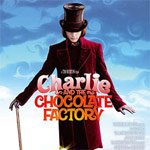 When I first heard that Tim Burton was going to make a new film adaptation of Roald Dahl's "Charlie and the Chocolate Factory", with Johnny Depp as Willie Wonka, I thought this I gotta see. Not only did I love all three previous collaborations between the two (Ed Wood especially), but Tim Burton's quirky imagination, sense of the gothic and affinity for outsides and weirdos seemed perfectly suited to the book, and aside from the fact that I'll see anything with Johnny Depp in it, I was interested in what he'd do with the character.
Somehow though, between reviews that complained his Willie Wonka was too much like Michael Jackson, others that called the movie just plain unsatisfying, and being in France at the time of its release, I managed not to see it. Until yesterday, that is, when I found out that sometimes you should just ignore reviews and go with your gut instinct, because this film is a near-perfect visualisation of the book.
I think what's different between me and say, MaryAnn Johanssen on this count, is that I had read the book about twenty times by the time I saw the 1971 version, and that, to be honest, I didn't really like that movie. Gene Wilder was pretty ok, alright, I'll admit, he was a good Willie Wonka, but the rest? It was just too different from the book, and I didn't see the point of what they added. To MaryAnn, however, the 1971 movie is the benchmark, and I can see why this movie could disappoint if you were expecting a retread of that film: it forgets that film ever existed, and goes back to the book. While watching, my family and I agreed that somehow it felt like we'd seen it before, and this has nothing to do with the 1971 film (I think I'm the only one who has seen it) but everything with how visual the book already was, and how closely the film sticks to it.
I think what makes Roald Dahl and Tim Burton fit so well together here is their sense of exaggeration. They know that sometimes things need to be over-the-top to be truthful. Dahl's bratty kids were so awful they could barely exist, and their punishments grotesque, but the conceit worked because of this. Like the chocolate factory in the title, everything was oversize, the imagination taking just one step further than you would have expected, and Burton understands this like no other. The house the Buckets live in is not just crooked, it's leaning over so far it's a wonder it hasn't falled over, and even the door is so slanted that the characters have to bend to enter. When a chocolate palace collapses, it does so completely and violently, giant columns of chocolate falling down. Burton undertands that it is necessary for everything to be so big, larger-than-life, he understands that the boat they use to travel down the chocolate river is made from candy and it looks it.
In fact, the only parts in which the film kind of fails are the ones that were added. Granted, the idea of Willie Wonka having a dentist father is a good one, and having the father played by Christopher Lee is a stroke of genius, but aside from this the backstory's just a little too neat psychologically. Dahl's Wonka didn't need a reason to be strange and arbitrary, didn't need a reason to have isolated himself from the world. He was just weird that way. Depp's Wonka however - and I blame this solely on the script - cannot say the word "parents", and a neat resolution of his complexes is in store for him at the end. The end doesn't work: Dahl knew the importance of a swift happy ending without much thought of the consequences, in fact, when he did write about the consequences, in his follow-up book "the Glass Elevator", he failed miserably, but Burton wanted more than just saying "and they all lived happily ever after" and leaving it at that, and it's too bad.
One last thing I would like to comment on is the Michael Jackson thing. I think that so many people saw Michael Jackson in Depp's performance has to do with how they viewed the film, with the trial at that point fresh in everybody's mind, because I looked for direct evidence and it just isn't there. Yes, Wonka is effeminate, and yes, he lives in his own fantasy world, but he hates children! Violet hugs him and he's horrified, just as Wonka in the book would have been. He is mean and he does not need a reason for it. He lures children into his Neverland not for his own purposes, but because he has no choice, and he has no trouble dispatching them one by one.
It might be that what confuses people is that they are used to looking for connections with reality. I often do it too, and often with reason: I'm almost sure the references to 9/11 in War of the Worlds was intentional, and it's not hard to find the criticism on forcefully bringing peace in Serenity. Tim Burton is a different creature from most directors, however, because he doesn't care much about reality. His mind is celluloid, and I don't think he intended any real world parallels with this film. With Tim Burton, it's all about the pretty pictures, it's about celebrating weirdo's, not about any contemporary allusions. Even other films do not interest him that much, because they are in reality. He only has one major reference to another film (well, films, but it revolves around one in particular) and it is, appropriately, in the Mike Teavee sequence.
If there is a message to this film, it is the same as the one in the book: it's a celebration of imagination. That's why Dahl opposes TV so much: not because there aren't worthwhile programs being made, but because it "makes the brain lazy". Mike Teavee is a smart kid, more so in the film than in the book, even, he figures out the "system" to find his bar (although I found the reference to the Nikkei index kind of ridiculous), he immediately sees why Wonka's idea to send a chocolate bar through the TV would not work, he is the voice of reality, in a way, seeing right through the "pointlessness" of Wonka's entreprise. Wonka's answer? Like in the book, he simply ignored this "voice of reality", tells Mike he's mumbling and that he can't understand a word he's saying. I believe both Dahl and Burton are trying to tell us this way that we shouldn't always restrict ourselves to reality, and that imagination is vital. I couldn't agree more, and I think the movie is worth seeing if only just for this: it shows just what is possible if you refuse to be restricted by reality.
There's only one other director who might fit Dahl just as well. It's Wes Anderson, of course, and he is currently working on an animated film based on... "The Fantastic Mr. Fox". I'm looking forward to it. Maybe these movies will be enough to make us forget the saccharine horror that was "Matilda".
0
comments
Labels:
movies,
Review,
Starred
12.25.2005
Gay? Big deal. He's Dying.
 Also from the Boomerang, but without the wretched first sentence.
The New York times probably put it most dramatically. “The Winner is…only acting gay” is the attention-claiming title of an article published not too long ago, an article that proclaimed a gay revolution. The Guardian, titling this year the “year of the Gay”, is not far behind. So what are these papers so in uproar about? What’s their big point?
Six, no fewer than six movies with gays in them are coming out this fall, count ‘em! No need to worry, though, both articles haste to comfort us, the actors playing them are very much straight. It’s Oscar time, people, and it seems playing gay is this year’s playing disabled, this year’s impressive weight loss or gain. Will the strategy work?
Include dramatic sigh.
Of the New York Times’ big invasion, only one film can be considered mainstream (the film adaptation of the musical Rent). Not only is the renowned newspaper clearly grasping to find a phenomenon to report on, but the angle they put on it is outrageous. Their main point? Playing gay is only accepted, nay, only possible, if the actor’s sexuality is decidedly “normal”.
Take Heath Ledger in what I confess to have called, like so many others, “the gay cowboy movie”, Brokeback Mountain. If we believe the New York times, the only way we can appreciate this love story between two men is because we know that Heath is a manly man in real life, who’s even knocked up his on- and offscreen wife/girlfriend, Michelle Williams. The Guardian goes so far as to suggest she’s been cast merely as a “sexual alibi”. And of course the fact that Peter Sarsgaard, who portrayed gay characters in several films, “appears in gossip columns linked with Maggie Gyllenhaal” is crucial. How ridiculous their point is, is best seen when using their own words: “Our awareness of these nonfiction roles makes it easier and maybe more acceptable for middle-class heterosexual viewers - a group that does, after all, include most of us in the audience - to embrace characters whose sexual preferences we don't share.”
Bollocks.
It just makes you want to flee to France, where they – at least on film, and in film criticism- have a more relaxed way of dealing with the subject. Take François Ozon, for example, one of France’s most prolific and interesting directors at the moment. The main character in his new film, , “Le Temps qui Reste” (the time that remains) is gay, and dying. In any American film, his illness would have been Aids. In this film, he gets cancer. Admittedly, this is necessary for a later plot point, but still: it shows that to this director and writer, the sexual orientation of this character is not the only thing that’s important. Despite some rather graphic scenes (yes, this is what my mother and I do for quality time) the film might not have been all that different had the main character been straight.
For all the above, but also for the beautiful music by Arvo Pärt, for the astounding cinematography, for the chance to see Jeanne Moreau shine on screen again, for some scenes that really worked, I would love to proclaim this film a masterpiece. Unfortunately, it isn’t.
It’s a pity really. Some parts here work beautifully, other almost do, but as a whole the film is ultimately unsatisfying. It charts what happens to beautiful, arrogant and yes, gay, photographer Romain after he finds out he only has a month or two to live. He pushes everyone away, his family, his boyfriend, and tells only his grandmother (Moreau) what’s going on. He goes to a darkroom. He sees himself as a kid. He has a conversation with a waitress in a diner who thinks he’s beautiful. In the end, Ozon returns to his fascination with beaches and lets his story end.
As the summary above, the film feels to episodic, too aimless. There are some nice moments with the boyfriend, and the short segment with his grandmother is wonderfully worked out, but in the end we have no insight whatsoever into his relationship with his family, with his sister especially. We don’t know why he reacts the way he does, why he shuts everyone out. We spend a whole movie with this man, but while it would take me a long time to grow weary of watching the beautiful Melvil Poupaud, we ultimately get no insight into who he is. As an exploration of death and how people deal with it, Ozon’s own “Sous le Sable” is a much better film, and it’s a pity, because this one shows the potential to be just as great.
Do actors win Academy Awards just for morphing, for once not their appearance, but their sexuality? Is Philip Seymour Hoffman a contender for best Actor this year because despite their differences in statures and physique he managed to embody who and how Truman Capote was, or because Truman happened to be gay? Until the media starts growing up and out of its jitterish and exalted treatment of homosexuality, it will be hard for movies that feature homosexual protagonists to be judged on their own merits.
0
comments
Labels:
movies,
Review,
Starred
11.07.2005
A History of Violence
 I love when I can re-use a picture...
A warning: the following is not a review of A History of Violence, David Cronenberg's latest, but a rumination on certain aspects of it. There will be spoilers galore, so if you still want to see this movie, stop right here. I mean it. I read too much beforehand, and I think the film would have hit me in a more visceral way if I hadn't.
First, I liked it. A lot. I wasn't entirely sure as I walked out a theatre, I had to think about it a bit, but now that I have...It is a bit too constructed in places, too crafted. On the other hand, wow.
One aspect I want to linger on is the two sex scenes. A friend told me he'd felt really uncomfortable watching them. Granted, he was in that theatre with his -according to the guy himself- uptight father, while I saw it with my significantly not-uptight (untight? downtight?) dad. Still, the guy complained that the scenes were, to him, "unappealing", "unpleasant" and the characters (played by Viggo Mortensen- who, I believe, must be the ultimate man, painfully perfect almost. Did you know he writes wonderfully, too?- and Maria Bello) "came of as unsophisticated retards".
Truth be told, I'd heard so much about these sex scenes beforehand that I was a bit let down. They weren't that explicit at all in terms of nudity (there is one shot of Maria Bello kind of nekkid that doesn't even technically occur in one of the sex scenes, and while we do get to see Viggo's buttocks, that's pretty much it) and while there was one sex scene, a pretty violent one at that, shown from beginning to end, it was to me fascinating rather than unsettling.
What also is uncommon about the film is that the first sex scene features oral sex, 69 to be presice, and many reviewers were boggled by this. I don't quite understand why. I mean, I both don't understand why it is so rare and why it was considered to be shocking in this one, especially because for once, this is not a gratuitous sex scene. It might not contribute to the plot, but it does work very well on both a personal and a symbolic level: it both illustrates the relationship between these two people and it creates a wondeful contract with the latter sex scene that really exemplifies the film's shift in tone, and the main character's shift in identity.
Let me expand a bit more on this latter thing. In the first scene Viggo is Tom Stall. He's not playing Tom Stall, he is Tom Stall. For example, as his wife gets changed in the bathroom, he is nervous, doesn't quite know what to do with himself. He straightens the covers, folds them open, grins at himself. He opens his shirt unsurely, starts undoing his belt, but it's clearly mostly because he doesn't know what else to do with his hands. When Edie comes out in the cheerleader outfid, he is honestly amazed. Another important characteristic of this scene is that it revolves around oral sex. This is not just for shock value at all, nor for titillation. It is because oral sex, no matter how much the giver might like or dislike doing it, is functionally a giving, unselfish act. Tom starts it to thank his wife, and she reciprocates. It shows that they love each other and are willing to sacrifice things for each other, and its innocence is further accentuated by their acting like teenagers. Mostly, it is in sharp contrast with the second scene.
In this second scene, the sex is all about taking. It starts out as a fight, kicking and grabbing throats, but all along there is sexual tension and this comes out soon enough. The sex is rough, with barely any words, and instead of the glowy aftermath of the first scene, it ends as abruptly as it started. Viggo is Joey in this scene, not the loving husband but the brutal, carnal killer. It's a scene that certainly unsettles, but for me, this was mostly because I found myself to be slightly turned on by it. I think this was probably Cronenberg's intention, just as it seems his intention with this entire film to confront us with how violence and sex appeal to us, turn us on.
What I admire about these sex scenes is the level of reality. I don't mean I think theses kinds of scenes happen everyday, but there's no soft focus, no underscoring music. Instead, there's clumsiness: in the first scene, Edie throws her husband's belt behind her and get startled by the sound it makes hitting the wall. In the second scene, we see her back later, covered with bruises: this sex is not without consequences, physical or mental.
Cronenberg seems like such an intelligent, fascinating man. I'd love to meet him and pick his mind, even if the thought of what I could find is a little unsettling. Or who am I kidding. It's because I think I might find something unsettling that I'm so interested, of course.
H.
0
comments
Labels:
movies,
Review,
Starred
10.06.2005
Slashing away

As promised: my article on slash. Plus, you even get the notes, which were brutally slahes away in the print version. Enjoy!
I am about to tell you something that only a few of my friends know, and that I don’t usually share with the general public. That is, you’re about to witness something of a coming out. A confession of a predilection that might strike some as odd. Maybe even as a little disturbing.
Enough with the suspense building! Out with it: I from time to time enjoy reading slash.
Chances are you’re not very shocked at this moment because you simply have no idea what on earth I am talking about. Well, let me explain. Let us start with the concept of fan fiction, a concept you might be more familiar with. Fan fiction is when fans of a certain book/TV-series/movie/comic book/video game write stories involving the characters and often settings of their source. Stories used to be spread through mailing lists or fanzines, but it was the birth of the internet that allowed the phenomenon to take flight. A site like www.fanfiction.net boasts thousands of stories based on hundreds of different sources, from the powerpuff girls (820 stories) to one of the most popular ones, the Harry potter books (206951 stories at the time of writing).
Fan fiction wiring is of course nothing new. It’s not even something limited to teenagers with an internet connection. For example, the novel “Wide Saragossa Sea” by Jean Rhys was based on characters from Jane Eyre, and there have been several other instances in which authors have elaborated on an already existing book.
Obviously, one of things most written about by fans are romantic entanglements. And this is where slash comes in: sometimes, it’s not romantic entanglements between a guy and girl, but between a guy and a guy (or, in some cases, a girl and a girl). Harry Potter and Draco Malfoy are a popular pairing, for example. Luke and Han, Wolverine and Cyclops, Xena and Gabrielle. Or, as I should write it, Xena/Gabrielle, because slash gets its name from, yes, the forward slash between the names of the paired people. There are variations: lesbian slash is sometimes called femslash, and when slash involves anime characters it’s often referred to as yaoi.
The most popular theory is that slash started with Kirk/Spock. Star Trek was one of the biggest fandoms about 30 years ago, partly because geeks are known to be prolific fan fiction writers and because there was a lot of frustration when the original Star Trek series got cancelled in 1969 (it took 18 years for the next show to start). Also, the Star Trek universe offered plenty of handy storytelling devices: Kirk and Spock (or any other two characters you might want to link romantically) could become stranded on a planet, caught in a force field etc. According to Wikipedia, the first published Kirk/Spock story dates from 1974, and there have been many thousands since.
The nice thing about the internet is that an originally rather underground movement gets the change to spread, and elaborate. There’s an entire vocabulary for fan fiction and slash. PWP stands for “plot? What plot?” and usually indicates a very short story (or “ficlet”) focused only on the hooking up of two characters (or, if the author should feel so inclined, three). A Mary Sue is an original character in fan fiction who is an idealised stand-in for the author (it has been estimated that almost 90 % of fan fiction and slash is written by females of all sexual orientations) and as such too pretty, too smart, and all-round too perfect to be true. RPS stands for Real-Person slash, a genre I’m not too fond of myself, which involves two random real people getting it on - or “shagging” if you’re more Duran Duran than Backstreet boys. Most writers give their stories a voluntary rating, based on those of the MPAA (PG, PG-13, R, NC-17), to indicate how much graphic description can be expected.
Now that I’ve told you what slash entails, the crucial question presents itself. What is it that I like about it? What makes me, on lost afternoons, google “Snape/Severus”, or alternatively, “Grissom slash”? [1]
I can’t really say. There is an element of sexual curiosity, of course (I’ve always found it strange that, while it is considered normal for guys to be turned on by the sight of two girls kissing, the opposite is seen as weird), but then why do I shy away from the stories rated NC-17? Probably my reading slash (and normal fan fiction too) is based on the same instinct that makes people read romance novels: we like reading about something we can never have. I truly believe that sex as in a (straight) romance novel is just as impossible to achieve as gay sex with a man is for me[2] but exactly because it’s something that cannot possibly be real, it rouses our imagination.
The fascination with gay men has been approaching mainstream status for a while now. “Will and Grace” is as mainstream as sitcoms come, but the more racy British show “queer as folk” was also popular enough to warrant an American remake. Coming out this fall –in time for Oscar season- is the latest film by Ang Lee, of Sense and Sensibility and Crouching Tiger fame: Brokeback Mountain, an adaptation of a prize-winning short story by Annie Proulx that revolves around the forbidden love between two cowboys, played by Heath Ledger and Jake Gyllenhaal.
The funny thing is, in reviews, critics have described the film as making explicit what you always imagined could happen between Butch Cassidy and the Sundance Kid, between John Wayne and Montgomery Clift, between any two cowboys really, alone in the wilderness, camping out. Now, I by no means wish to imply that what Annie Proulx has done in her wonderful story (it can be found online) is merely what slash writers do every day, especially since, to be honest, much fan fiction doesn’t deserve prizes for style, but it is easy to imagine her story starting as one of the what-ifs slash writers concern themselves with.
What if Legolas comforted Aragorn in his tent at night? What if Dawson and Pacey got locked in a closet together? What if Seth and Ryan’s exes decided they were more interested in each other than in boys[3]?
[1] the CSI chef, with his interest in and understanding of sexual subcultures, and who in an episode once said that “the only unnatural sexual behavior is none at all.”, is a relative newcomer in the world of slash, but already very popular
[2] Without radical surgery, that is
[3] Oh wait, the OC’s creators thought of that one themselves… Although I wager Marissa and Alex had gotten busy many times in slash stories before they did on screen.
1 comments
Labels:
Starred
10.05.2005
Editorial
The Boomerang will be out soon, which means...I'll be lazy and post my boomerang articles instead of new content. To start with, my very own editorial "On Enthusiasm"
'
Let me start by getting something out of the way. I, the new Arts & Kitsch editor, am a science major, taking four science courses. What, then, am I doing writing and editing articles about the Arts?
Call me an enthusiast.
Enthusiastic mostly about movies, but also about music, books, TV shows, paintings etc. I have an ever-increasing DVD collection, always have music playing in my room, and have read avidly ever since I was five. To say it in a corny fashion, Physics might have my brain, but the Arts have my heart. I love it when I suddenly discover something marvellous, eye-opening and moving that I’ve never even heard about before. It makes me all giddy, puts a grin on my face. And it makes me want to share what I discovered with anyone who will listen.
Do you ever get that feeling?
If so, then you’ve found a listener here. Its name is the Boomerang Arts & Kitsch section.
We’re looking for many short and long pieces about anything artsy and kitschy, whether it falls under high or low culture, whether it’s celebrated and not, whether someone besides the artist him or herself has ever heard about it or not. Whether loathe or adore it. We are especially looking for articles that make people aware of arty things that are unknown, but not entirely inaccessible. Articles about indie or foreign movies, about music that flies just below the radar, about small exhibitions, about original comics, online or off line, about things that float just out of reach of mainstream status, if you catch my drift.
Articles about things like the guy playing out the entire Star Wars trilogy on his own (www.onemanstarwars.com), doing all the parts, all the voices, all the sound effect. Or like the unexpected poetry of things people overhead in the Big Apple. (www.overheardinnewyork.com). Or like a website that randomly combines images and text from blogs into a fascinating and ever changing transitory work of art (http://turbulence.org/Works/dynamo/index.html).
These examples have a common connection to one another, and this is not entirely a coincidence. The Internet has opened up new opportunities for expression for arts enthusiast, just as it did for enthusiasts of all other kinds. And lucky for us, access is more or less free. I could tell you a certain book is fantastic, but how many would buy it? I could write an entire article about a DVD box set I think everyone should see, but what’s the point if we’re all living on small student budgets? However, surfing to a website address is easy, cheap, and there are so many fascinating websites buried beneath layers and layers of porn and spam. One other big advantage of the Internet is that there exists at least one fan club for everything you could possibly think of. Every fandom, every hobby, every fetish has hundreds or thousands of websites and blogs dedicated to it. And because the sheer immensity of the Internet makes it almost impossible to penetrate directly to its good material, some signposts or shortcuts are usually not superfluous.
Let me also say that I think we have a very nice collection of articles in this issue. Three fans of the TV-series Lost (airing on Friday nights on Net 5) offer their theories on what lies beneath the plot. Elvira offers an overview of all the major high-art museums you could be visiting. Jelmer tells us about his experience listening to a man and his electric shoe. There’s my confession about loving slash, and even a crossword to keep you occupied in between classes.
But our palms are always open, eagerly awaiting more contributions by our readers. I might know quite a few unknown movies and artists but one person’s taste is always limited, and one person’s knowledge too. You’re not going to see me recommending obscure hip-hop bands, review kung fu, or tell you about new experimental video art, not because I think those topics are unworthy or irrelevant, but because they are outside of my area of expertise and, I’ll admit it, because they’re not something I am personally a big fan of. But I don’t plan to dominate this section by what I like, and by what I know. This section is meant as a platform for everything people can get enthusiastic about within the domain of the Arts and the Kitsch, and I am very much looking forward to what worlds you can reveal to me, and to your other fellow students.
Of course, enthusiasm has a flip side. It often implies a certain lack of judgment, lack of criticism. When you’re truly enthusiastic about something you tend to dismiss its less fabulous characteristics and ignore any dissenters we might encounter, telling ourselves they just don’t “get it”. Despite this, criticism is a valuable thing, and something I would also like to see in this section. In reactions to what we have written, but also just if you’d like to give your balanced, well-defended opinion of something.
There is so much Arts & Kitsch out there. So much of it we do not know. This section will hopefully open our eyes to just a little bit more than what we knew before.
0
comments
Labels:
Starred
9.27.2005
No Direction Home
 "It was not necessary for him to be a definite person"
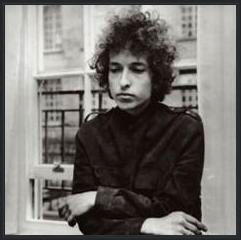
I just saw the first part of Martin Scorsese's "No Direction home", his documentary about Bob Dylan. It lasted almost two hours. I had to pee after twenty minutes, but I couldn't bring myself to stop watching, not even for a minute.
It's just that fascinating.
Somehow, you can feel that the guy who directed this is used to narrative. Oh, there's no voice-over, and the structure is anything but linear - unlike the traditional biopic - and yet, still, there's a story here. Oh yes, we hear of Dylan's start and evolution as a musician, filled with wonderful archive footage and even more wonderful music, not just by him but by so many of the people who inspired him, sang at the same time as him, or simply were part of the same movement he came out of. But in between, we see footage of a later performance (or several performances, I'm not sure) in Britain where Dylan is booed, called a traitor, told to go off stage, and many of the people interviewed on the spot talk of betrayal, of infidelity in a way. It's a great way of building curiosity about how Dylan went from folk hero to outcast, and it makes us think about how things we see might give hints of what's to come, but it also shows that Scorsese's taken a very clear beginning and ending for his story. And has a very clear idea about how to get from start to finish, refusing the linear approach.
I know I seem to be talking about music and movies a lot. It's a subject that's been making me think lately though. For example, this documentary, you could say it's mostly about what people sing and about what people say, about sound then. Still, it would have been an entirely different experience. Many documentaries get criticized for being just talking heads, and many documentary makers seem to think the solution can be found in flashy cuts and animations.
Not Scorsese though. He cuts away to silent images of bare trees in mist. To beautiful pictures of ordinary people, black and white masterpieces. And he chooses just those images that suggest something just a little more complicated underneath.
There have been complaints that Dylan and his "people" had too much say in how the movie turned out. That crucial people he might or might not have stolen from have been left out. That overall, this is just another cryptic tribute to the master.
I'm not sure. Yes, Dylan is portrayed rather positively, as an opportunist, a borrower, a conceited asshole sometimes, perhaps, but above everything as a chameleon and a genius. An inspirator. But then again, can there really be a documentary about Dylan that denies that he's an elusive kind of virtuoso?
One thing the documentary really emphasized is something I didn't really know of before: music really was a malleable, cannibalized thing back then, or well, more than it is now. Bob Dylan himself started out singing other people's songs, and the movie quickly offered shots of a dozen albums that all featured "Blowin' in the wind". There is also an image of a pop chart with Blowin' in the wind...Sung by Peter, Paul and Mary. I have to admit I'm not an expert on sixties music, but I've never heard of them. The only version of the song I knew until now was the one sung by Dylan himself.
The idea we get from the doc - and I say it this carefully because I really have no way of checking the accuracy of this - is that songs were pretty much fair game. There's talk of a version of House of the rising sun being passed on, more or less voluntarily, from one of the people interviewed (I'm bad at names...) to Dylan, who put it on his first album, to the Animals, whose version is now not only famous but, I think, for many people the one version they know, even if they are aware that it is actually a much older traditional song.
Funny detail: Bob Dylan is also seen in this singing "Man of Constant Sorrow". Yes, the song from "O' brother where art thou".
The other thing that really struck me is the fact that he was twenty when all this started. Twenty when he started writing songs, started performing, started to mold a dozen different styles together, refining them to what would become the sound of a generation.
I'm twenty.
Oh well. I've never really thought i'd have a life story worthy of a Scorsese doc anyway.
The thing is, of course, that I got acquainted with Bob Dylan long after his glory days. Long after his metamorphosing. For a long time, all I knew of him was his Best Of, and to me, Blowin' in the rain and Like a Rolling Stone fit right together. Oh, my dad told me that Dylan "went all Christian for a while", and that the quality of his music was kind of variable, but my dad, being born in 51, kind of came to Bob Dylan late too, and his favorite album - I think - is "Blonde on Blonde" from 66, the year Scorsese chose to let his documentary end.
Bob Dylan, of course, relishes being an enigma. There's one quote in the film from Joan Baez who remembers Dylan amusing himself, thinking of all the people who will analyze his lyrics, lyrics he admits to not understanding completely himself. I usually dislike pretentious obscureness, but I can imagine the feeling. And Dylan's words are so fun to interpret, which is why, soon, I'll add "Cronicles, Vol. 1" to my Sinterklaas list on the right.
The funny thing is, Dylan influences or not, in the current interview he always seems...dodgy somehow. He acts the wizened man, admits to probably having been wrong, but somehow, he gives off the impression that he's just trying to con us once more. Scorsese gets in his face during this interview, everything's in close-up, every twitch recorded, and rather than this giving an impression of honesty and openness, it makes the man even more impenetrable. Like Scorsese wants to let us realize that whatever images he shows us, we're going to have to make up our own minds anyway.
One last thing about the chamelionness many of the interviewed people emphasize. Yes, he switched from country to folk to more electronic music, but from the distance of say thirty-five years, the changes lose their magnitude, and the anger people expressed felt hysterical.
Then again, I follow every single change in direction Ryan Adams makes with the greatest interest, and they aren't even change in message or content, just in musical style. He got himself a backing band too, and I'm not sure I'm all that enthusiastic about that. But that'sa topic for another day, for another rambling entry about Ryan Adams, his new CD, the why of my name...
The second part of No Direction Home airs on BBC2 tomorrow, 10 pm Dutch time (9pm in Britain). I'll be sure to go to the bathroom beforehand this time.
H.
P.S. Now that I see what Scorsese can do with a documentary...if anyone knows where I can get his "il mio viaggio in Italia" (or his doc on American movies that inspired him) in the Netherlands, let me know.
0
comments
Labels:
movies,
music,
Review,
Starred


